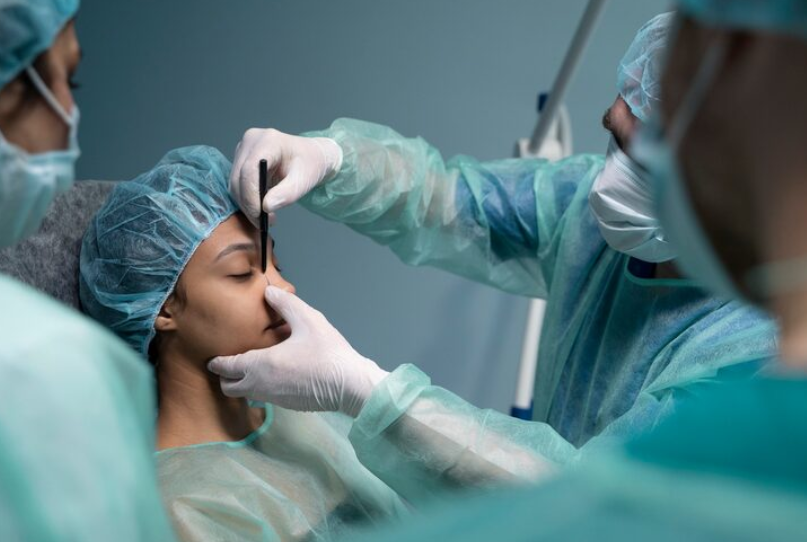
A second nose surgery after a primary rhinoplasty, often called revision or secondary rhinoplasty, is not just a repeat of the first one. It brings its own set of challenges that can make it more detailed and difficult. Whether the goal is to fix cosmetic concerns, correct a breathing problem, or adjust something that just does not feel right, the process takes more planning and care the second time around.
People thinking about revision rhinoplasty in Newport Beach often ask why the second time is harder than the first. It makes sense to wonder. After all, you have already been through the process once. But having surgery again means working with different conditions inside your nose. The healing from the first surgery changes the structure, which means we are starting from a different place.
Winter in Southern California is a popular season for procedures like this. The milder weather, cooler temps, and fewer outdoor activities can help make recovery a little easier. If this is something on your mind right now, it is a good idea to understand what makes secondary rhinoplasty different.
Scar Tissue Changes the Playing Field
Scar tissue is one of the biggest reasons why a second nose job is not as straightforward as the first. Surgery causes controlled trauma. That is part of healing. Once the body responds, it lays down scar tissue, and that stays behind.
This scarring is not just on the surface. It is deep in the nose and can stick to multiple layers that used to be more flexible. That affects how the nose heals, how it looks, and how much freedom we have to shape it again. We might find that the cartilage or bone underneath is smaller, shifted, or stuck in place.
When we go into revision surgery, we need to work slowly and carefully around these areas. The healing is less predictable now. It is not always clear how much scar tissue is present until we are in surgery. That means planning is more precise, and every move matters. Sometimes, we have to adjust the plan once we understand what is happening structurally inside. Every step has to be thoughtful so the new changes have the best chance of healing smoothly.
Cartilage May Be Limited or Damaged
In many first-time rhinoplasties, cartilage gets reshaped, moved, or trimmed. That is often necessary to build the shape someone wants. But that same cartilage might be missing or too altered to support a second surgery.
If the structure was weakened, or if too much was taken out, we may need to bring in cartilage from other areas of the body. This might include the ear or sometimes a rib, depending on what is needed. Adding this back in and shaping it to fit your features adds a new layer of complexity to the process.
Unlike the first time, we are changing shape and rebuilding support. That takes more planning. The new cartilage has to be positioned in a stable way so the nose looks better and functions well, too. Tissue memory means the nose might want to fall back into its old shape, so we have to account for that as well.
Expectations, Emotions, and Pressure Run Higher
The emotional side of a second surgery cannot be ignored. Many people come to us after their first rhinoplasty did not meet their hopes, even if nothing was wrong from a technical perspective. That disappointment can sit heavy. You might wonder if it can ever be fixed or whether to just live with it.
A revision needs more than surgical skills. It starts with honest, open conversations. We talk through the possibilities and the limitations. We look at your healing, your structure, and your goals. This is about balancing how you feel and what is actually possible, which helps avoid new disappointments later.
Trust plays a bigger role the second time around. Patients need to feel confident that their concerns are heard and understood. From our side as surgeons, the pressure can feel higher to get it right, but we welcome that responsibility. The extra care and planning that go into revisions are part of helping create results that feel worth it in the end.
Why Knowledge of Advanced Techniques Matters
More advanced tools and techniques give us better options when performing revision rhinoplasty. We often use approaches that allow for more control, especially around delicate or reshaped bone. One tool that can help in revision work is Piezosurgery. It uses ultrasound to reshape bone with great accuracy, minimizing trauma to nearby tissue. Dr. Kosins helped bring piezoelectric instrumentation into wider rhinoplasty use and has relied on Piezosurgery across his rhinoplasty procedures for years, which fits especially well with the precision required in secondary cases.
When going into a revision, it is not about repeating the original moves. It is about knowing how to get around the scar tissue, how to find healthy cartilage, and how to rebuild something that is no longer in its natural state. This calls for a deep understanding of both structure and function. One wrong cut can change the nose’s shape entirely or interfere with breathing.
It matters that we can see the whole picture, what happened before, what is there now, and what we want to happen next. That is a different type of skill set than what is used in primary rhinoplasty, and it is something we take seriously every step of the way. He is a member of The Rhinoplasty Society and edits the rhinoplasty section of the Aesthetic Surgery Journal, roles that involve ongoing study and teaching of complex nasal surgery.
The Value of Getting It Right the Second Time
Revision rhinoplasty asks a lot from both the surgeon and the patient. It is more than going back in and making a couple of tweaks. Between the scar tissue, structural changes, and emotional weight, the second time around carries more layers. That is especially true in a place like Newport Beach, California, where people often seek very refined, personalized results.
Getting it right means taking more time, being more precise, and having the right experience to guide each step. Recovery may look slightly different too. The body heals in a new way after a second procedure, and that unpredictability is part of the plan. The key is working with someone who looks at your nose not just through the lens of improving it, but fully understanding what it has been through.
While revision rhinoplasty in Newport Beach can bring excellent results, it is the planning and trust at the center that really matter. Every choice made in surgery has a different weight the second time around, which is why we take it seriously beginning to end.
Revision surgery requires more than technical skill. It calls for patience, trust, and a clear plan built around what your nose truly needs. We consider every angle, from past procedure details to how your body heals to create a result that feels right for you. Those considering improving or correcting a previous surgery can learn more about what sets apart our approach to revision rhinoplasty in Newport Beach. At Dr. Aaron Kosins we take the time to understand your concerns and help you move forward with confidence. Give us a call when you are ready to schedule a conversation.